Wall Street slips from its record following the latest weak update on the U.S. economy
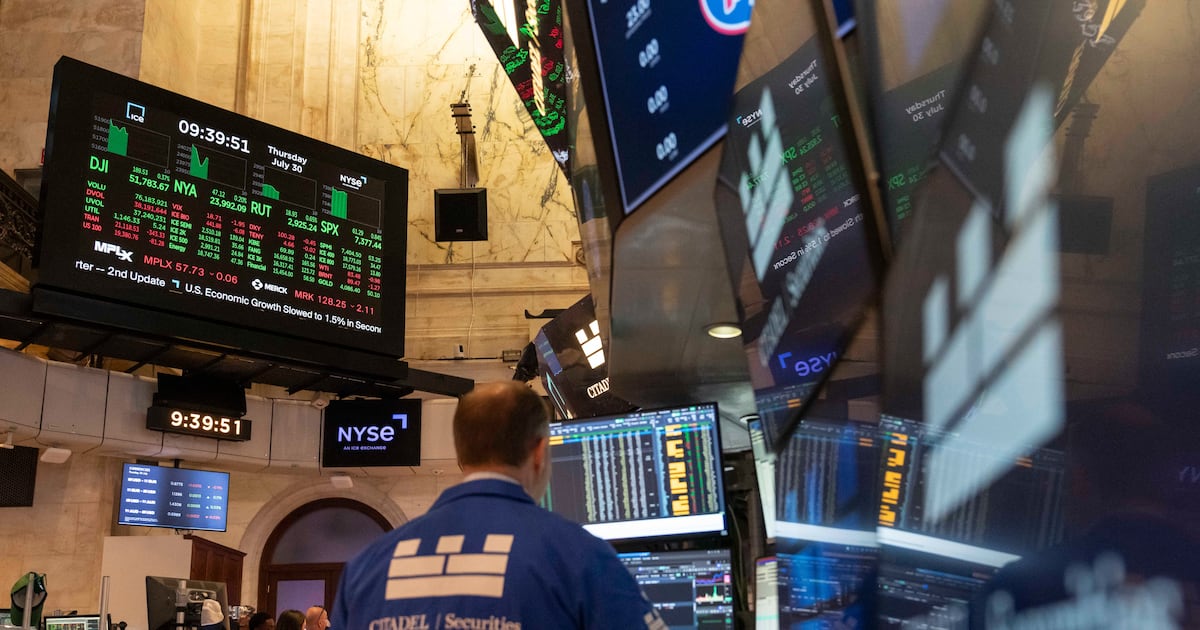
- The U.S. stock market declined from its all-time high following a weak retail sales report.
- The S&P 500 fell 0.2 percent, while the Dow Jones Industrial Average and Nasdaq composite also experienced slight dips.
- Consumer spending at U.S. retailers decreased last month, surprising economists who expected growth.
- This decline in spending may alleviate inflation pressure but raises concerns about a slowing economy.
- A preliminary survey indicated that consumer sentiment is weakening more than expected, particularly among older and lower-income groups.
The U.S. stock market edged back from its all-time high Friday following the latest report on the economy to come in surprisingly weak, particularly regarding consumer spending at retailers. The S&P 500 slipped 0.2 percent from its record set the day before, while the Dow Jones Industrial Average dipped 107 points, or 0.2 percent, and the Nasdaq composite sank 0.3 percent.
The report indicating that shoppers spent less at U.S. retailers last month surprised economists who were forecasting another month of growth. Although this pullback in spending could ease inflation pressures, it also raises the risk of a slowing economy amid still high inflation levels.
A preliminary survey by the University of Michigan suggested that consumer sentiment is weakening more than economists expected, with notable declines among older, lower-income groups who are particularly affected by inflation. Despite the losses, the S&P 500 managed to close out a third straight winning week, marking its longest such streak since May.
华尔街在最新美国经济疲软报告后从历史高点回落
美国股市在周五从历史高点回落,原因是最新的经济报告显示消费者在零售商的支出意外疲软。标准普尔500指数较前一天的纪录下跌了0.2%,而道琼斯工业平均指数下跌了107点,或0.2%,纳斯达克综合指数则下跌了0.3%。
报告显示,上个月美国零售商的消费者支出减少,令经济学家感到意外,他们原本预测会有增长。尽管消费支出的下降可能缓解通胀压力,但在通胀水平仍然高企的情况下,这也增加了经济放缓的风险。
密歇根大学的一项初步调查显示,消费者信心的减弱超出经济学家的预期,尤其是在受通胀影响较大的老年人和低收入群体中出现了显著下降。尽管出现了损失,标准普尔500指数仍然完成了第三周的连续上涨,标志着自五月以来最长的上涨周期。